

Partying Through Plagues
on 'the odyssey,' natural disaster, jia tolentino and the present

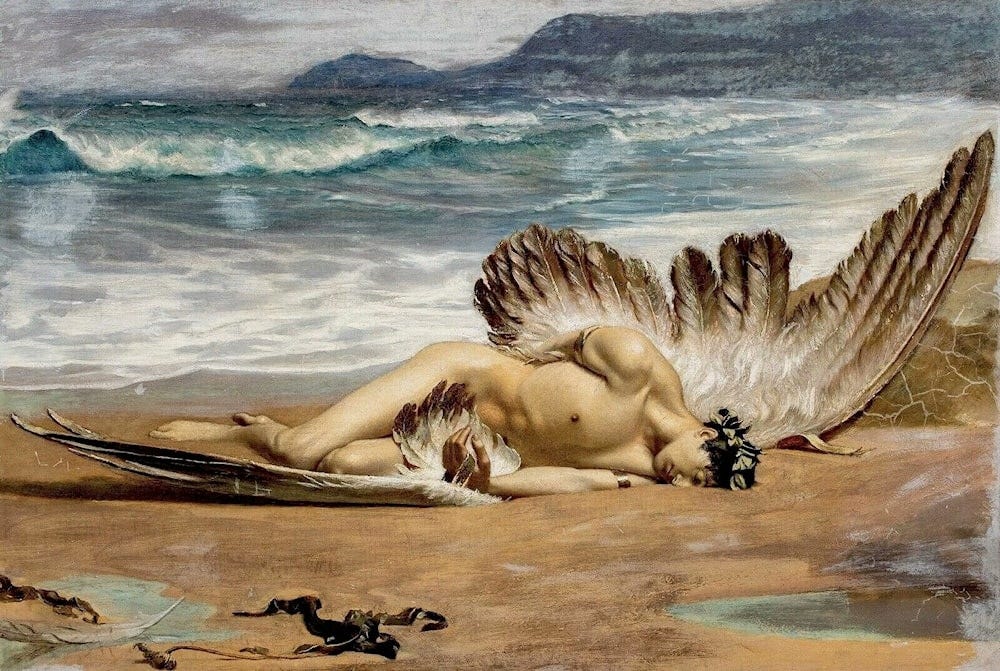
A plague arrived last Saturday. Brown soot flooded from the sky and blanketed the streets, leaving gritty streaks against the exterior of my bedroom window like teary mascara. Smoke had drifted south from the Canadian wildfires, choking the city’s precipitation in an ashy veil, polluting the rain with opaque debris. An evacuation order was issued. Cell phones blurted with flash flood warnings, interrupting group chats and TikTok scrolls to warn of “dangerous and life-threatening” circumstances.
But to all of this, I was apathetic.
Jaded by the many plagues before it, I sprawled across my bed as rainfall assaulted the glass pane and refreshed the AMC Lincoln Square website on both my laptop and phone for The Odyssey tickets. I had done it so often, had tugged the top of my phone screen so frequently in the hopes of obtaining a seat in the sold-out 70mm theatre, that the website had begun to limit how many times I could refresh it. It must have thought I was a bot. Stuck on a loop.
Just a few days earlier, I braved a heatwave with the rest of New York, commuting to work, dinners, and drinks as the air quality worsened in tandem with the wildfires. Produce had been ruled out because of a strange, shit-inducing bacteria called Cyclospora, and, just that Friday, Legionnaires’ disease had taken its first life on the Upper East Side. On the exact night of the death, I sat in a dark restaurant in Flatiron over a colourful plate of branzino as a friend described their recent bout with a respiratory infection that seemed to match one I’d had a week earlier. It was hard to deduce what caused the cold, one that lingered a few days too long, and left us fatigued; New York had been active, and we had been outside, my last few weeks filled with nights of Knicks games, and World Cup watch parties, back-to-back late concerts for Madonna and Jay-Z in Queens and the Bronx with hellish commutes home, afternoon kikis at Fort Greene’s Soul Summit under the voracious scorn of the sun. Across the country, and around the world, people carried on despite the deteriorating conditions. We partied through the plagues, nonchalant about whether it made us sicker.
Perhaps the plagues were self-induced. As a child, I learned in Bible study that all plagues were somewhat your own fault – a sort of punishment, or a way to atone for your sins. Such is true for climate change; such is true in the Book of Exodus. The Odyssey poster on the AMC website read “DEFY THE GODS” in white capital letters, and I supposed that we were paying the price for that defiance.

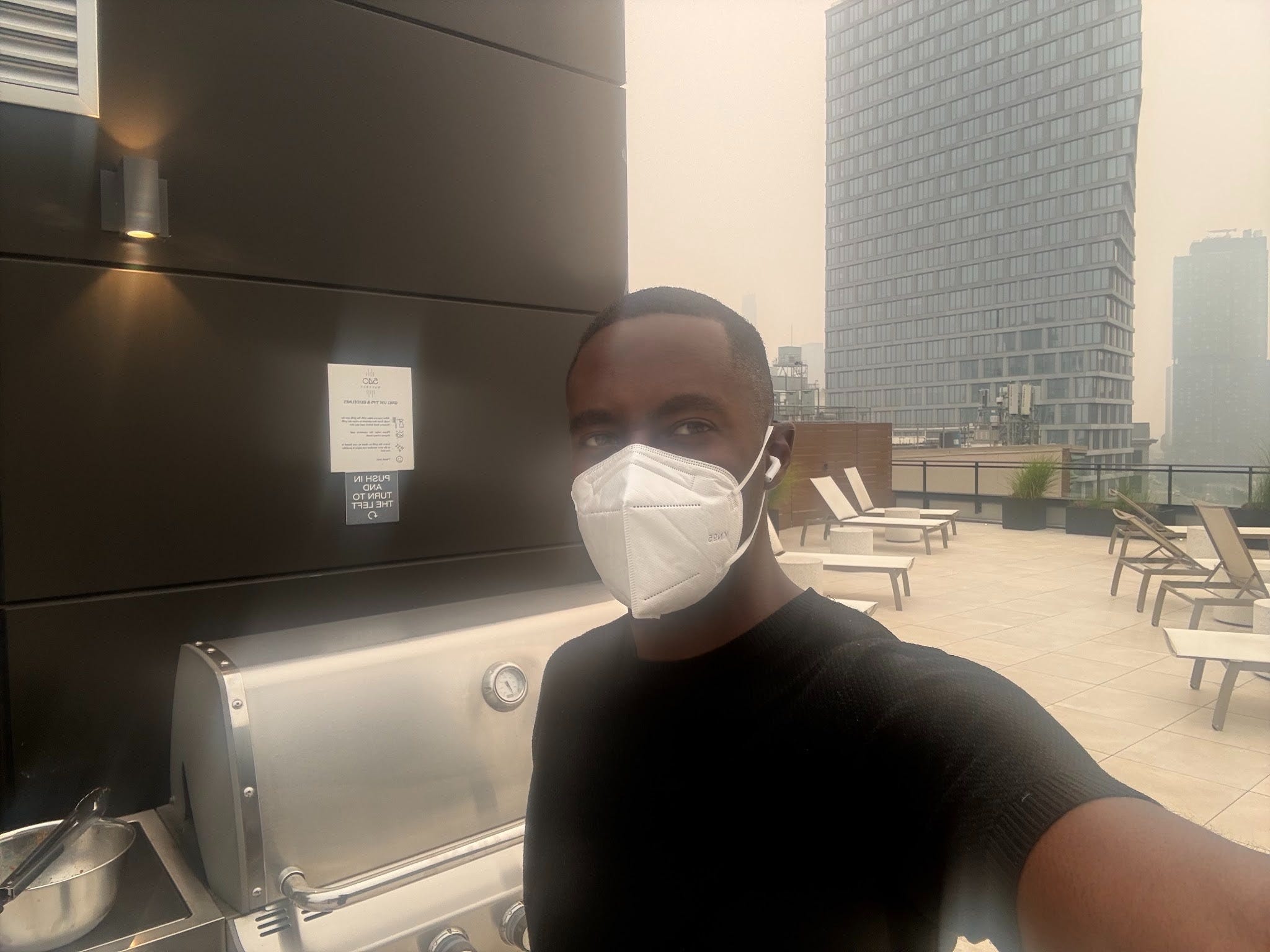
Carrying on during a plague isn’t radical. Pointing it out isn’t novel, either. War, natural disasters, and disease have always been a constant, regardless of our collective efforts or apathy. But what happens when the world gives up before you do?
Much of the contemporary is wrought with this bizarre juxtaposition. Society prioritizes the youth, the preservation of ourselves at our most primitive, and, through innovation, we’ve found ways to slow the decay. Everything from the corporeal — leveraging freezing technologies and fountains of youth that promise to slow time through plastic surgery, peptides and “looksmaxxing” so we can outlive the wear and tear we put ourselves through — to the less tangible expressions of self beyond the flesh — the way we siphon identity through online avatars, post curated photographs as permanent footprints, and type to immortalize ourselves through captions, messaging apps, and newsletters like this one, all digitized and encrypted to survive us, and the apocalypse we’ve created.
It is this hypocrisy that has placed us so passively at the foot of the plagues. An unnatural belief system in which we apply a false permanence to everything, and in turn, everything erodes faster. The environment, our agricultural system, the planet, our spirit. The dichotomy reminds me of the beguiling motif of Oscar Wilde’s The Picture of Dorian Gray, where, through a Faustian bargain, the titular protagonist remains young and handsome while his portrait withers grotesquely with age, gravely weathered by the crimes he commits. The planet is the portrait, becoming ugly — its terrain sun-spotted and liver-lipped by heat and disease — while we prolong our beauty, outrunning the plagues for now. For now. It was always for now for Dorian, until it wasn’t.

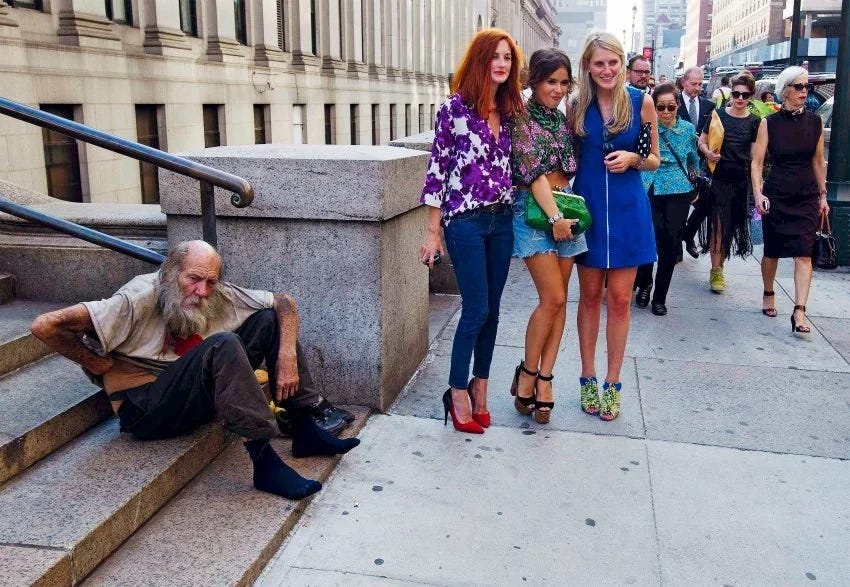
Twelve years ago, a picture of three high-heeled women posing for another camera, out of frame, surfaced on Reddit. The women are smartly dressed on a busy New York street, and it is Fashion Week. It’s safe to say that whatever image that they share, whatever they choose to upload, their brutal exterior will be cropped out. Sometimes living through a plague feels like this picture. Even if you don’t mention it, the outline is there.
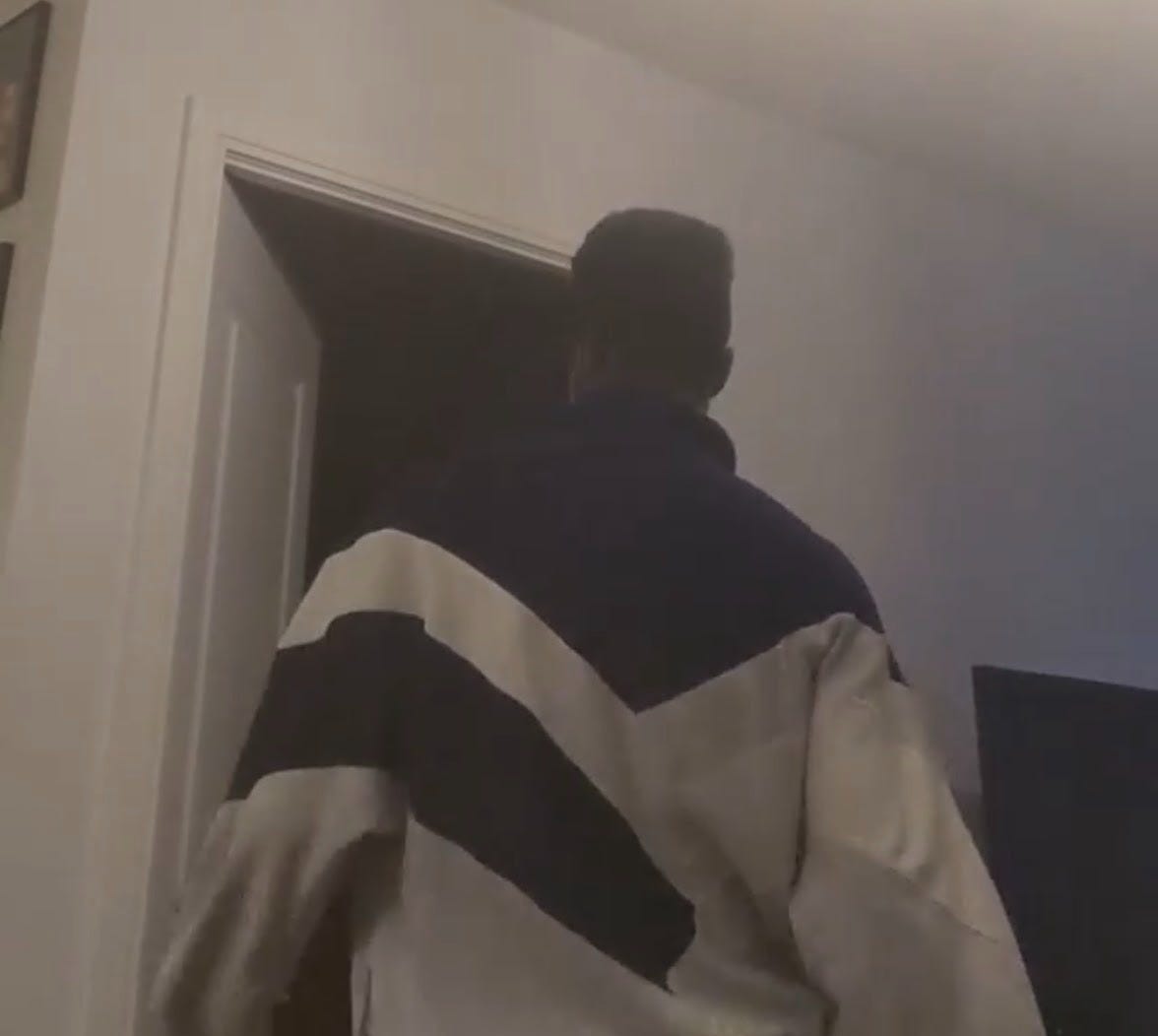
A close friend from my high school days texts me a video. The quality of the video is smudgy, and its content exists in a poorly lit cloud, as if the quality has been strained through years of software updates. In the video, a boy positions his cell phone camera on a flat surface before stepping back a few steps. Next, he begins to dance rather vivaciously to Dua Lipa’s “Pretty Please.” His overgrown hair and his choice of music position the video in the early days of the COVID-19 pandemic; we were all dancing indoors to Future Nostalgia, haircuts were forbidden in the city he was living in at the time. He swings his arms about, gazing over his shoulder coyly as he raises one hand to roll down the sleeve of a blue and white zip-up sweater, a sweater belonging to another boy who has since left the city to shelter in place elsewhere. The owner of the sweater won’t return to the city, but the boy dancing doesn’t know this yet. It’s still early, and he’s new to plagues. Optimistic, even. I replay and watch again, mesmerised by how he attacks the beat with a jovial vigor that he has since lost. His enthusiasm is infectious, perhaps too of a different era. My friend texts me again, in lowercase type as she usually does: “every few months this comes up and i die.” I rewind the video and watch again.

This month, New Yorker staff writer Jia Tolentino published an essay called “Our Plastic-Surgery Nightmare.” In the essay, Tolentino reviews the latest innovation in facial-freezing technology and cosmetic interventions, and outlines the horrors of chasing a beauty ideal that is constantly migrating and progressively based on digitized, AI faces. These faces are not only inhuman, but divorced from desire and eroticism.
I read Tolentino’s essay at 3:23am on the 4 train after a very delayed Jay-Z show at Yankee Stadium. A couple of days later, I get accused — rather aggressively over Gildas, mind you — by a friend of being on GHK-Cu, when I really just use a good PDRN moisturizer. I think about the anxieties some of my friends have expressed with aging, how some of their bodies at the age of thirty appear more svelte than they did in their twenties. We are called the “on-demand” generation, and in that classification, the implication is that we are more interested in the immediate ROI of a seven-step skincare routine, a last-minute and increasingly expensive vacation with the group chat, or an Uber Eats delivery than the potential of buying a home or the promise of a savings account. These, of course, are exaggerations. A generous rounding up, but we know at this point that a mortgage will not save us from a plague. And there are many more plagues to come. This hyperfocus on the present matches the conclusion of Tolentino’s piece, one where we’d rather our focus be on extending our youth, albeit pressurized towards an unattainable standard, instead of pursuing sustainable longevity. The end is too garish, too ugly to look at, and so we remain present-minded, not as interested in the future as our aging parents once were.
On a literary level, “Our Plastic Surgery Nightmare” acts as a spiritual successor to Tolentino’s 2019 piece, “The Age of Instagram Face,” which she references in the first few paragraphs of her essay. And yet, the repetition of the same problem, her self-reference, her continued return to a society wrought by the same plague, drew in critics, as if staring at the same issue in the face six years later, dressed somewhat differently, were no longer adequate. I view Tolentino’s preoccupation with this topic as similar to our entrapment with the present, one that is in line with our passivity during plagues. The problems persist, so we sigh and keep going about our business.
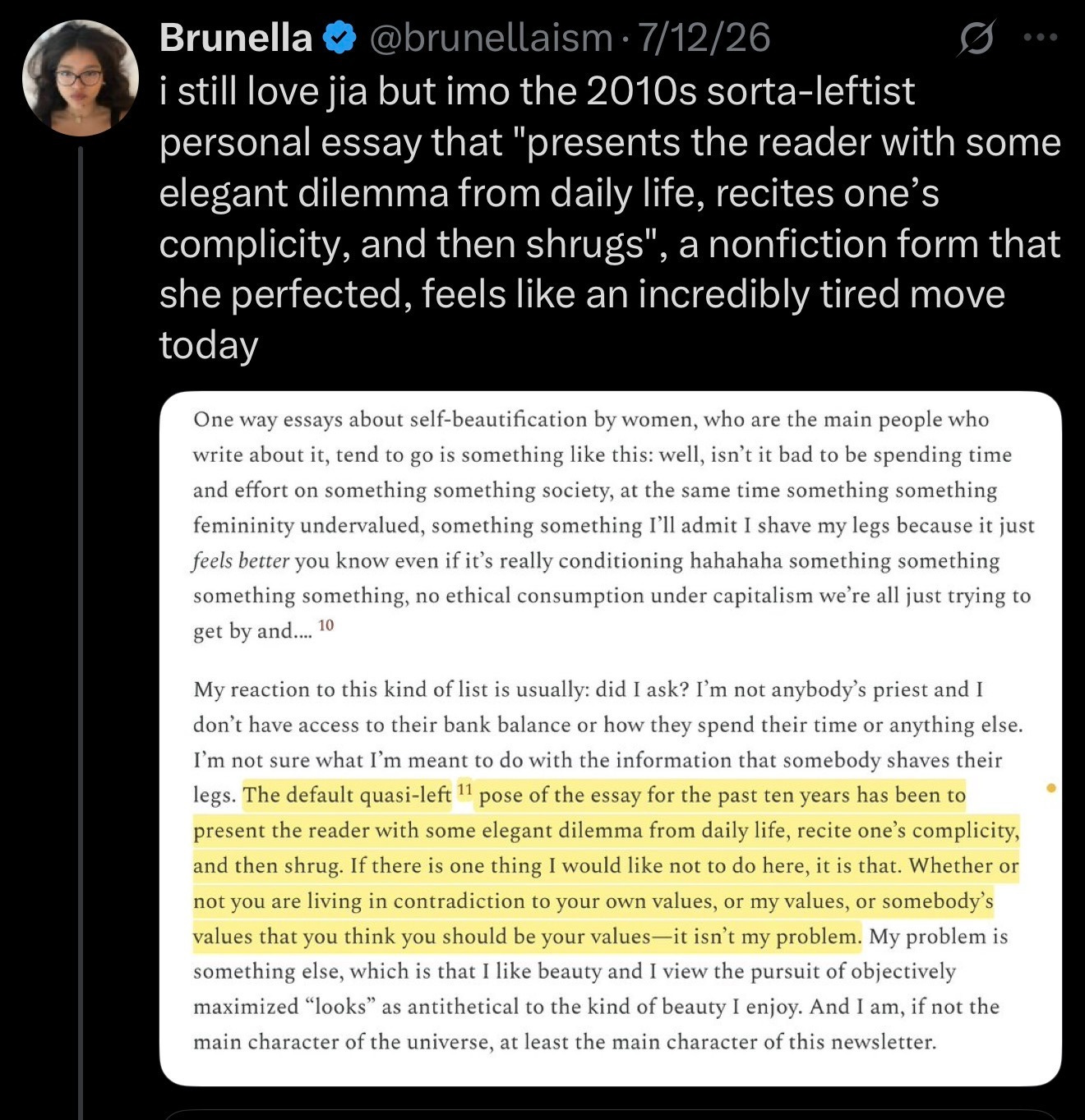
Perhaps I am defensive of Tolentino because I see myself — and this newsletter — in the bullseye of this critique, in her capacity to analyze and draw attention to a specific error in human behaviour and yet fall short of offering a rigorous solution. But Tolentino isn’t a philosopher. Or an economist. Or even a politician.
There’s something human about acknowledging and naming an ill, and recognizing your own feebleness and fragility in facing it. It’s only part of the equation, yes. After all, carrying on during a plague isn’t radical. Pointing it out isn’t novel, either. I can spot a plague, and fall victim to it. I can watch the cloud of sickness approach me and, knowing the odds, dance in the face of an inevitable contagion. The human experience is marked by our capacity to hold both of those things in one’s mind and attempt to not implode. To act, to admire, to destroy, to preserve, to fuck, to save, and ultimately to live with all the contradictions while carving out a life.

When the future is discounted, the value of the present goes up. Our focus on the present is acknowledged in a recent essay that rayne fisher-quann published a few weeks ago on her Substack. Instead of warped beauty ideals, Quann focuses on the contemporary writer’s penchant for coding topics as novel that are, in fact, not. Terms like “now more than ever” and “increasingly” are thrown around, usually at the beginning of a paragraph to add urgency to the writer’s point, when the data would suggest that these problems have always existed. In doing so, the writer dangerously eliminates the past and adjusts the reader’s attention only to the present. Quann writes:
“… the problems faced by people decades and centuries before us were not always so different from our own, and that if we look closely, we might be able to place ourselves within a historical struggle. We can reminisce about a time before TikTok, iPhones, or MeToo as a way out of our current problems, but we are likely to be disappointed: it is those conditions, after all, that brought us to these ones.”
I think about the concept of place in all of this, specifically Quann’s line about placing ourselves within a historical struggle. There’s comfort in that, even if for some it leads to inaction. Even if it leads to the momentary ease of vibing out on the glitchy AMC website instead of acknowledging the worsening natural disaster. It makes sense that Tolentino has been circling around the same thing, and why half the internet has been rewriting her landmark optimization essay since 2019; our problems exist in a monotonous tow. These mundane plagues keep us tethered in the same place. If these struggles have always been there, then the concept of the present is all we have. We are wedged in time, perpetually on a hamster wheel that feels like it’s rolling off a cliff at the end of the world, but ends up carrying on in place.
Being present is good. Still, I don’t know if being present in the face of a diminishing future is an act of surrender or cowardice. Is being hyperfocused on the present when the world is on fire, and perhaps has always been, nirvana or distraction? Perhaps what is missing is specificity. A specificity that looks back as much as it looks ahead. Who is to say that times now are worse than before, but the shrapnel of the plagues — the exploitation, the fascism, the racism, and the genocide — should be dealt with a specificity that marries the conditions of the present with the learnings of plagues of the past.

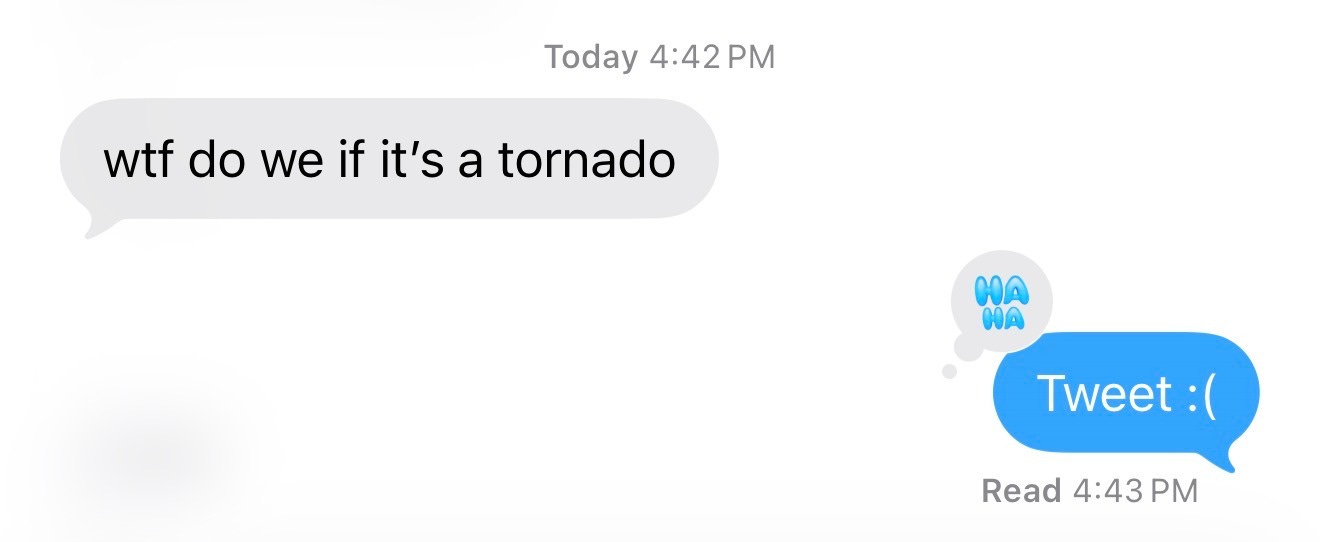
On Tuesday, a new plague arrived. But it was a false prophecy. There was a tornado alert, but no tornado. Although I am not complaining about the absence of a natural disaster, I texted my friend to remark on the flop. I put on my shoes to get strawberry fennel gelato as a mothball of clouds whispered above my head.

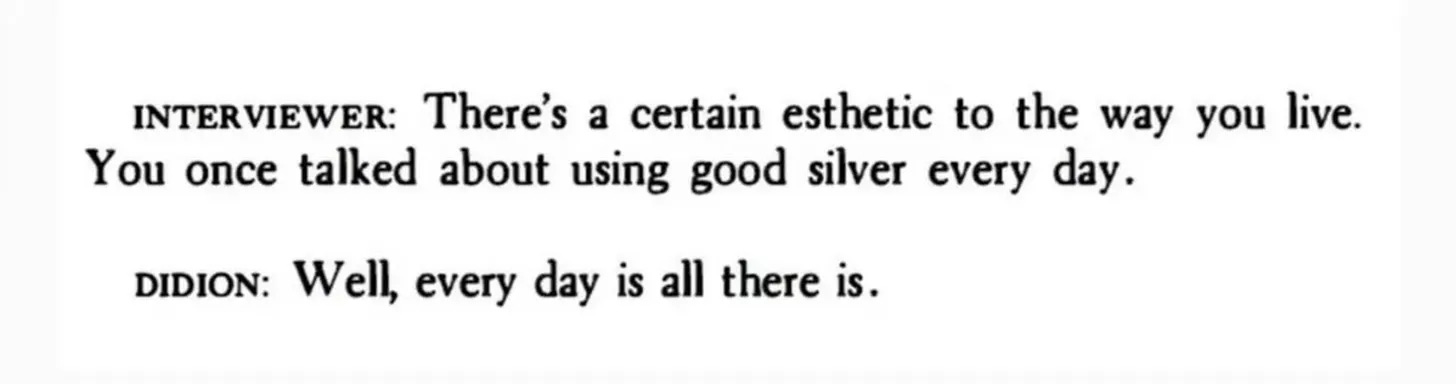
“What I remembered most afterward besides Renzo’s incredible body and his magical stamina was the sultry smell of burning, which I thought was us…” Eve Babitz says this in her story “Expensive Regrets,” remarking on her days-long fuck-fest in the Chateau Marmont with her Italian lover, in which she arose to the smell of smoke and thought, rather flippantly for a few moments, that the smell was coming from their own lovemaking. (How embarrassing.)
In actuality, the smell was that of buildings ablaze from riots, flames of anger, and anguish from citizens protesting the racist beating of Rodney King at the hands of police officers in 1992. Babitz’s ignorance isn’t to be celebrated, and police killing Black men isn’t novel. Under this context, one that plays on a tireless loop in history over and over again, the present is less of a common place for collective, historical struggle, and rather a trap. It’s fatiguing to see so little progress, and maybe that’s why we’ve become immovable. Hardened like stonework, frozen in time. If the problems stay the same, our environment becomes more of a purgatory, and we are apathetic to burning it all down. It’s perpetual. It’s present. The plague is present. The plague is ever present. The plague is present. The plague is perpetual. The plague is. The plague. The plague—
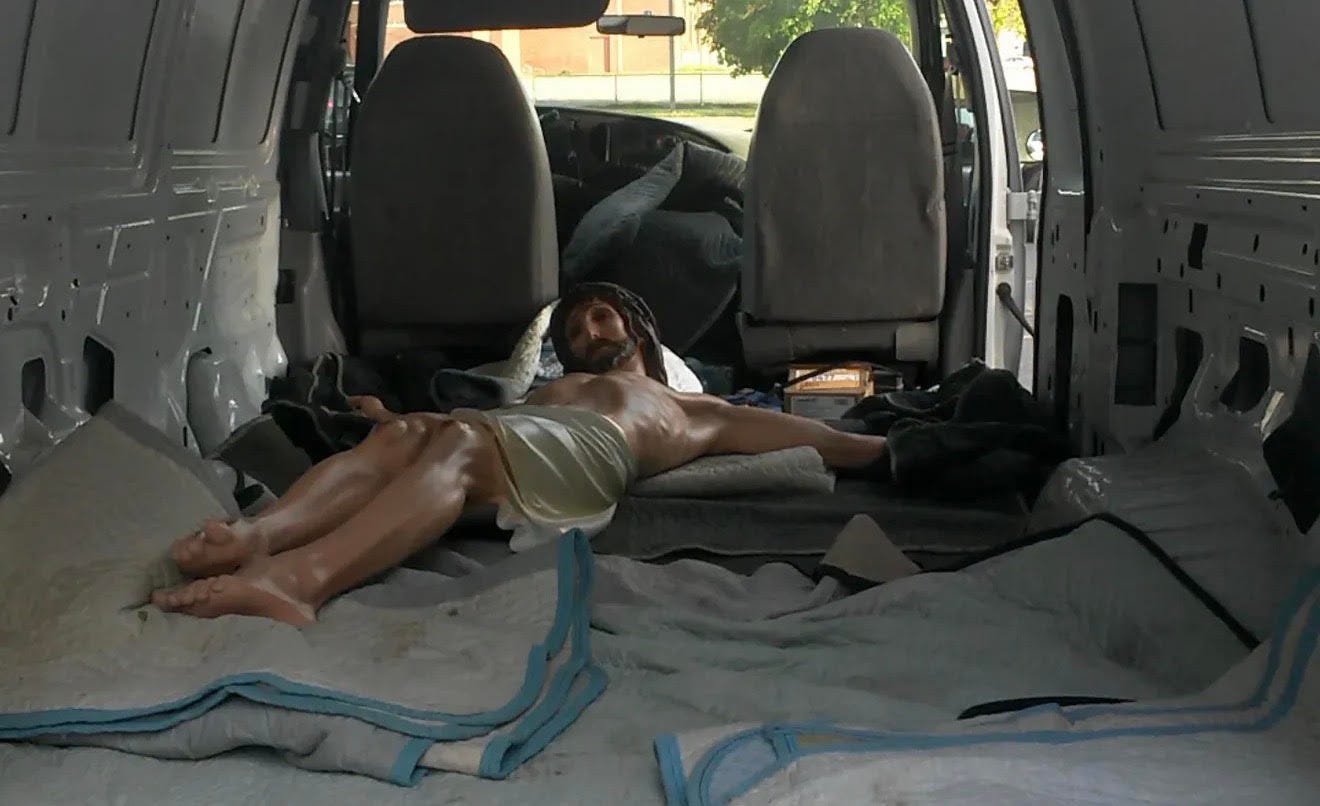
I eventually secured tickets to The Odyssey, relegated to seeing it in a sold-out theatre at 1:00 AM. The seats were less than desirable but not as bad as they could be. I thoroughly enjoyed the film and am in awe of Christopher Nolan’s adaptation of a nearly three-thousand-year-old poem for contemporary audiences. The scenes that I replay in my mind upon leaving the AMC are the ones that feature Odysseus raving against the volatile mysticism of his environment – the alluring ballads of the sirens, the danger of the Cyclops, the destructive magic of Circe. The Trojan horse scenework also marks stellar storytelling from Nolan, and it’s affirming to see how a tale from the late 8th century BC can still be entertaining today.
Upon discussion with a few of my friends who have seen the film, we remark on the similarities between The Odyssey and Nolan’s previous work. Not only am I an admirer of Nolan’s work in general, but I also love it when an artist’s oeuvre circles particular themes and symbols, winking to the audience, perhaps offering an insight into what is preoccupying them. An itch they can’t scratch, or a scab they can’t help but pick. Across The Odyssey, Dunkirk, and Inception, there are the shared opening scenes on the beach. There is the non-linear storytelling that marks most of his films, causing his signature disorientation. There are the actresses who don’t say much, but do wondrous jobs with the material that they are given. But what speaks to me the most loudly is the link between The Odyssey and Oppenheimer. In both films, the protagonist must come to terms with their own responsibility for the destruction of their environment. In Oppenheimer, the protagonist has created the atomic bomb, a warfare innovation that has since blossomed into the global militarized anxiety over nuclear warfare present today. Similarly, in The Odyssey, Odysseus must reckon with his savagery during the Trojan War as he realizes – with the help of Zendaya! – that he is one of the violators of Zeus’s Law. Both films have their ‘heroes’ excavate the ills of the world only to contend with how their own hand might have led to the very same ills. They’ve weathered the plague long enough to find themselves at the end. It will take the arrival of the future to recognize that this is a gift.
LOOSEY is a bi-weekly newsletter about culture, technology, and the way we live. If this is something you like, consider subscribing and sharing. Let’s be friends on Instagram.
Sundays are for Loosey long reads