

The Met's "Costume Art" and The Year The Body Became Optional
designer bodies, designer clothes!

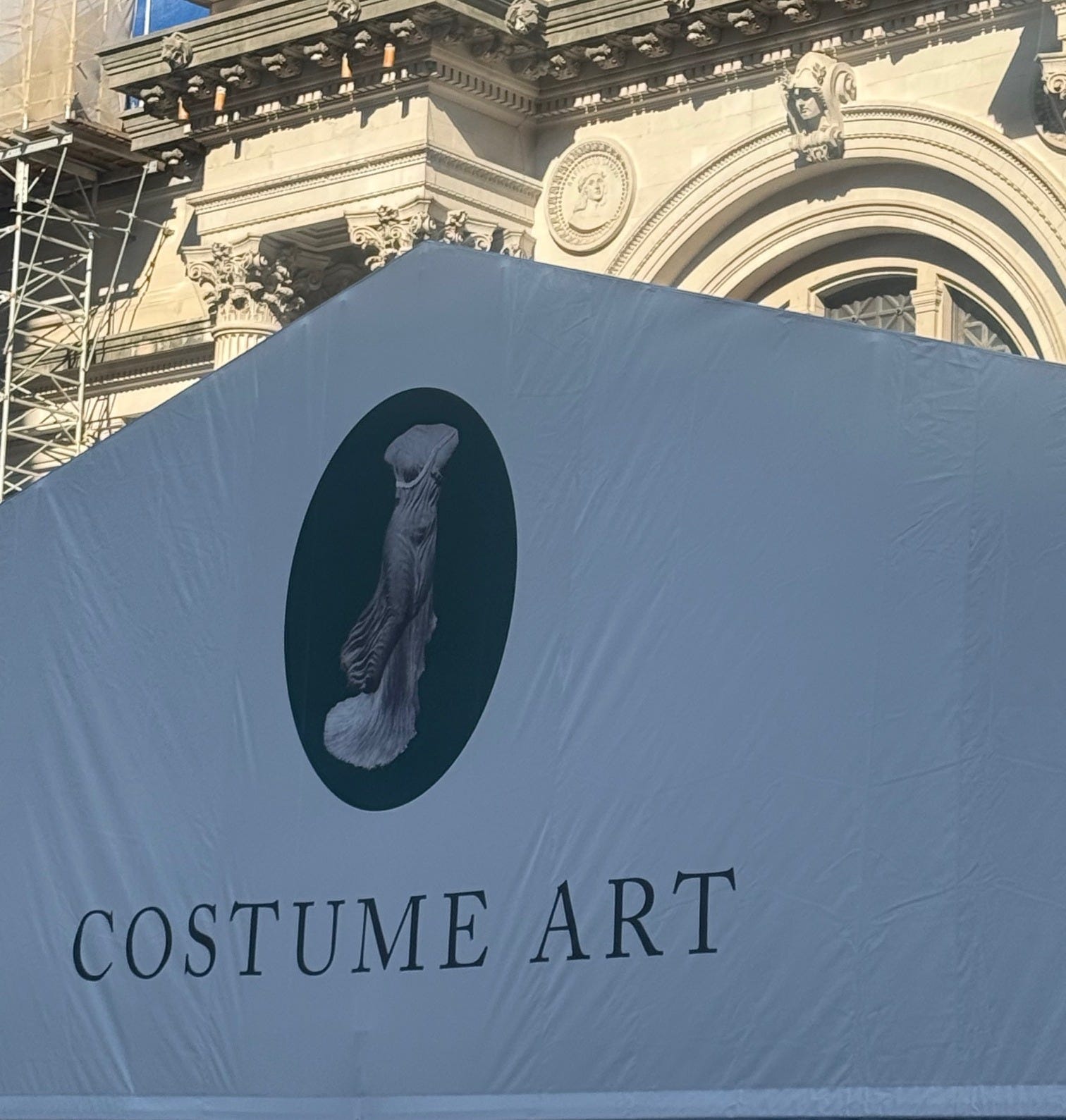
Almost a week ago, during the bright squints of a Monday morning, I headed uptown for a special press presentation at New York’s Metropolitan Museum of Art. The sun had yet to assume its domineering position in the sky, and the streets were only beginning to clear themselves of the harried morning commute. Paparazzi and fans, who appeared to have been camping out all night to witness the evening’s Met Gala, were ready before we were, and I squeezed past them, wary of their sturdy SLRs and expensive lighting equipment as I funneled into the museum with a handful of the city’s best-dressed writers. Security waited for us outside, and then inside again, scanning our invitations before we headed up to the presentation. Remembering how quickly the seats filled up last year, I snagged a chair, finger-waving at familiar faces as they trickled in while attempting to predict which of the three co-chairs – Nicole Kidman, Venus Williams, or Beyoncé – would be the guest speaker at the morning’s presentation.
This year, the Costume Institute’s exhibition theme centers on “Costume Art,” which explores “depictions of the dressed body across The Met’s vast collection.” The exhibit links fashion to the museum’s extensive collection of artwork to maintain that “Fashion Is Art” while highlighting the relationship between clothing and the body. Later that day, the Met’s head curator, Andrew Bolton, expressed that art has always been about the history of the dressed body. How it’s dressed, draped, and fashioned. Within the exhibit, the wearer of the garment is both the observer of the art and the canvas.
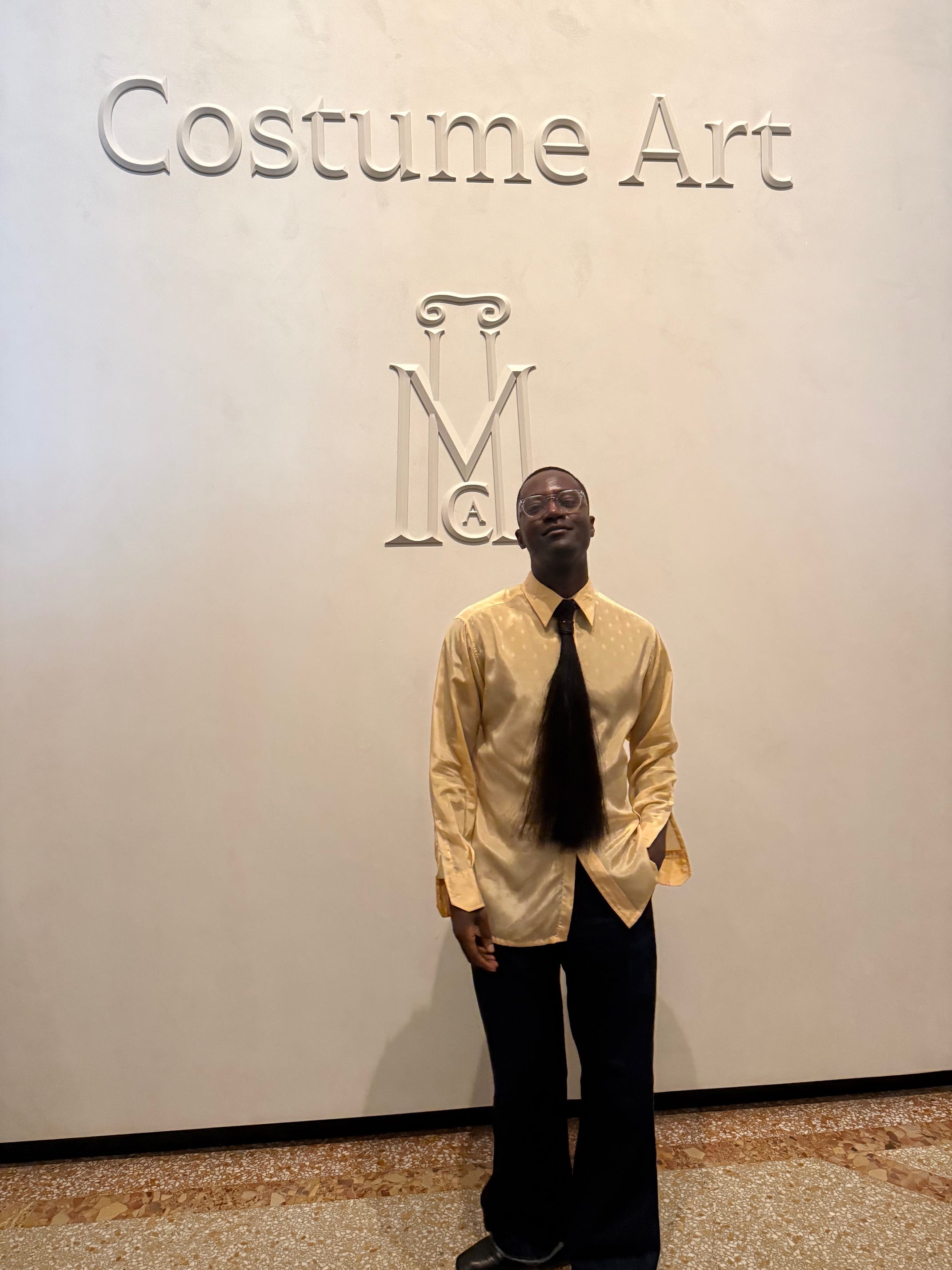
At about 9:45am, a somber piano ballad spilled into the room, and we fell silent in anticipation of what was to come. The atrium doors swung open, and I strained my neck to see who was worthy of this haunting adagio. I heard the clicks of flash cameras, then I saw specks of Anna Wintour’s golden-blonde bob. Who followed her was not Nicole or Beyoncé as I had been falsely prophesying, but, instead, Lauren Sánchez Bezos, who Wintour later referred to as an “honourary” co-chair while thanking her for her generosity. Venus Williams followed, elegant as always, sporting a crisp bob as well. The three women cycled through remarks, cataloguing the eighty-year relationship between the Costume Institute and the Met; how this year, the Met had no issues selling seats (Wintour put that rumour do bed with her signature tact), raising a record-breaking $42 million of the $500 million Wintour has raised for the museum in her lifetime; and, of course, how fashion is for everybody and every body: nude bodies, disabled bodies, and classical bodies, to name a few. Then, they let us into the exhibit.
The exhibit’s focus on the body was topical and piqued my interest. As cosmetic procedures become more readily accessible and advertised, and body-morphing pharmaceuticals, like peptides, begin to proliferate the modern household’s lexicon, the idea of “body as art” seems exceptionally ripe. More than ever, how you look is considered a choice. Red carpet after red carpet, we observe how the faces and bodies of our generation’s stars rapidly mutate: some withering to bits as their heads bobble, while others take years off of their faces with ‘undetectable’ lifts and lasers. Men are not exempt from treating the bodies that they were born with as Silly Putty, opting to warp and maximize themselves into something new. Young men achieve gender-affirming care under the questionable instruction of “looksmaxxing” streamers like Clavicular, who encourages his followers to “bone-smash” their jawline and take meth to achieve a more masculine physique and “ascend.” Influencers document their hair transplant journeys, drum up the wrong kind of engagement for their botched ethnic rhinoplasties, and The Cut wants you to believe that Botox is the norm when only 3.5% of adult women in America have undergone the procedure. Could 2026 be the year that the body you were born in became optional?
In the midst of this cultural shift, a repurposed quote from the designer Rick Owens has frequently gone viral, speaking to the relationship between fashion and bodies:
“Working out is modern couture. No outfit is going to make you look or feel as good as having a fit body. Buy less clothing, go to the gym instead.”
Owens has been open about his own steroid use and how it has led to what he calls ‘self-invention.’ In other words, screw the paint; just focus on the canvas.
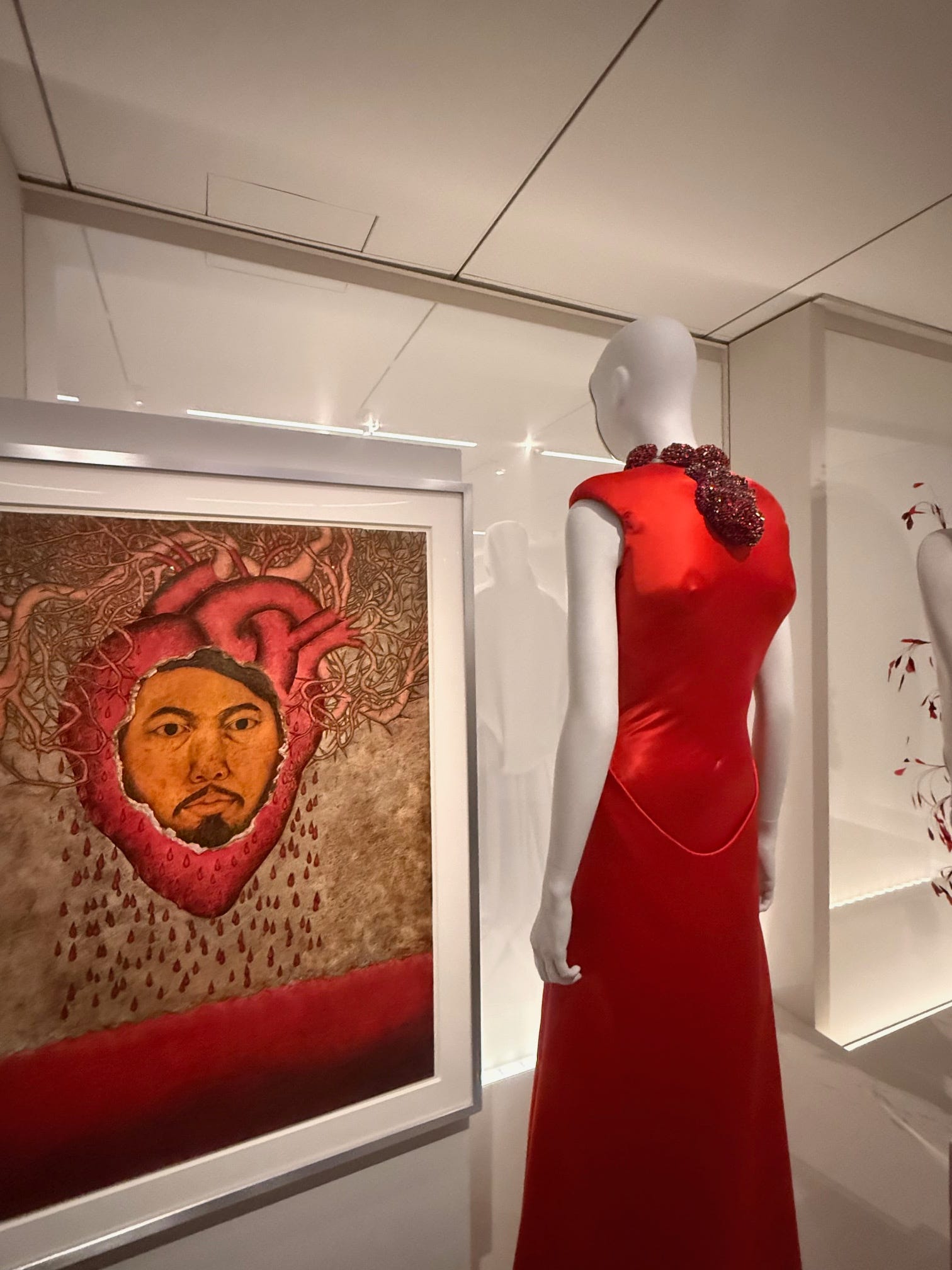
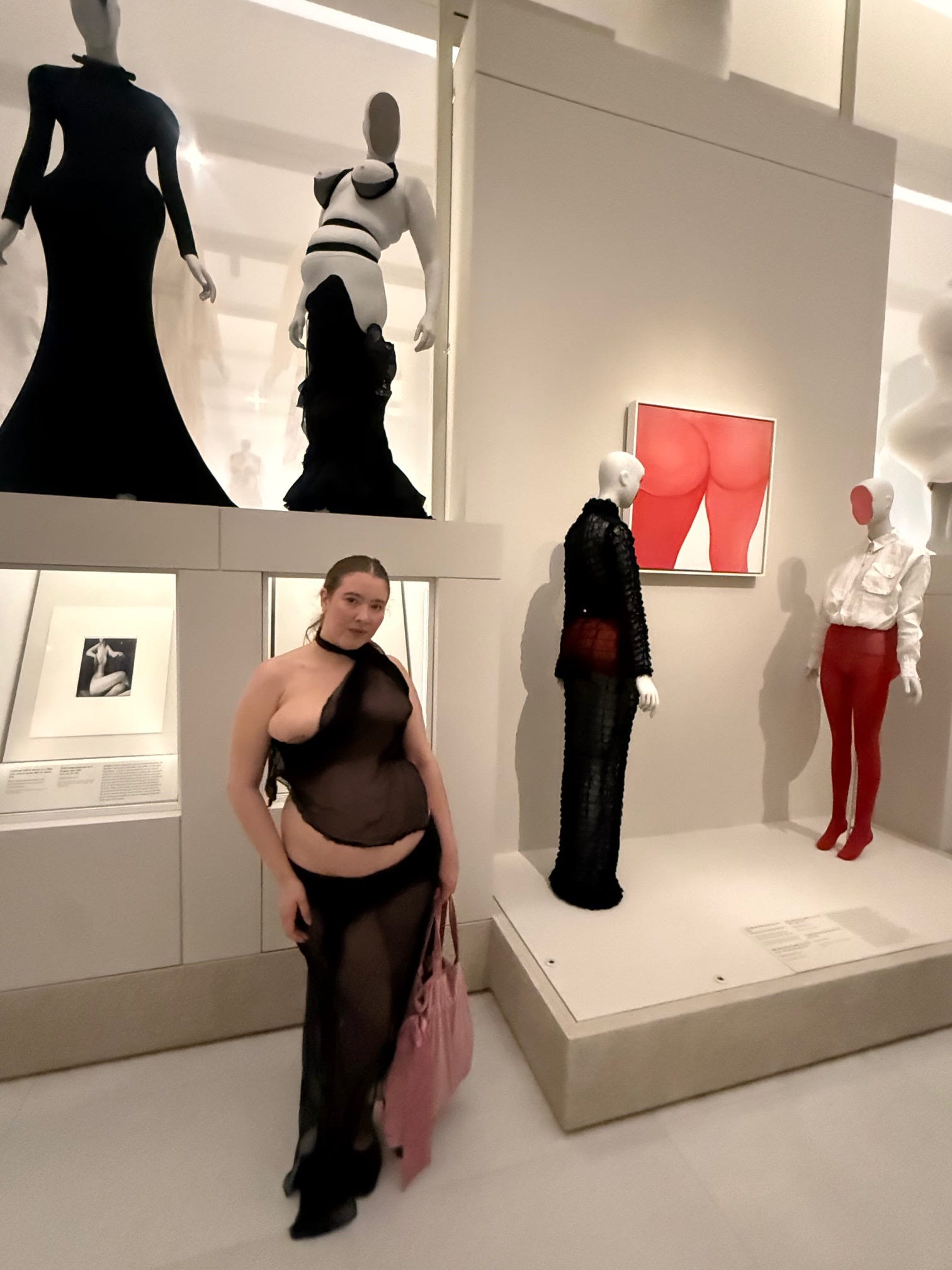
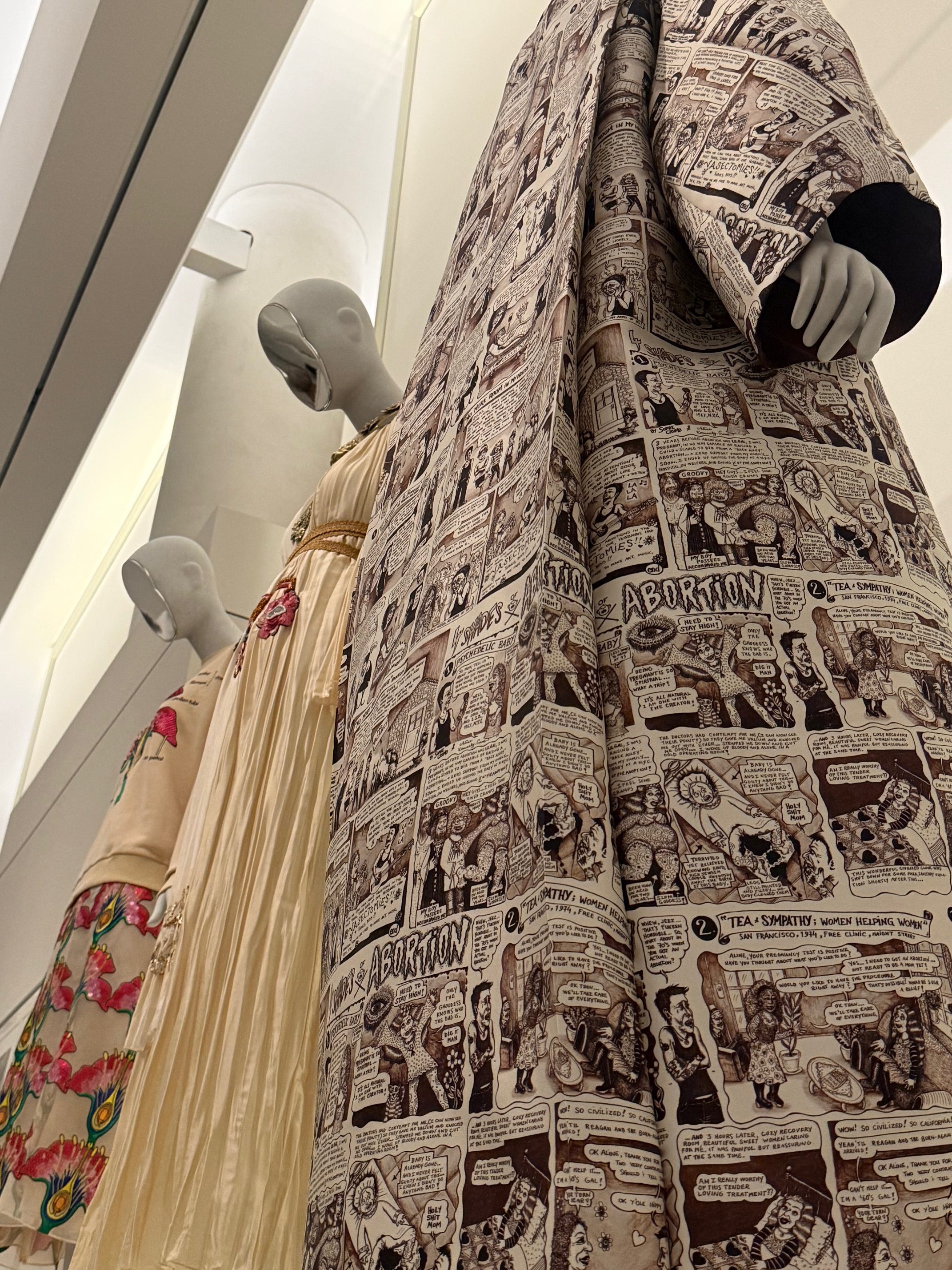
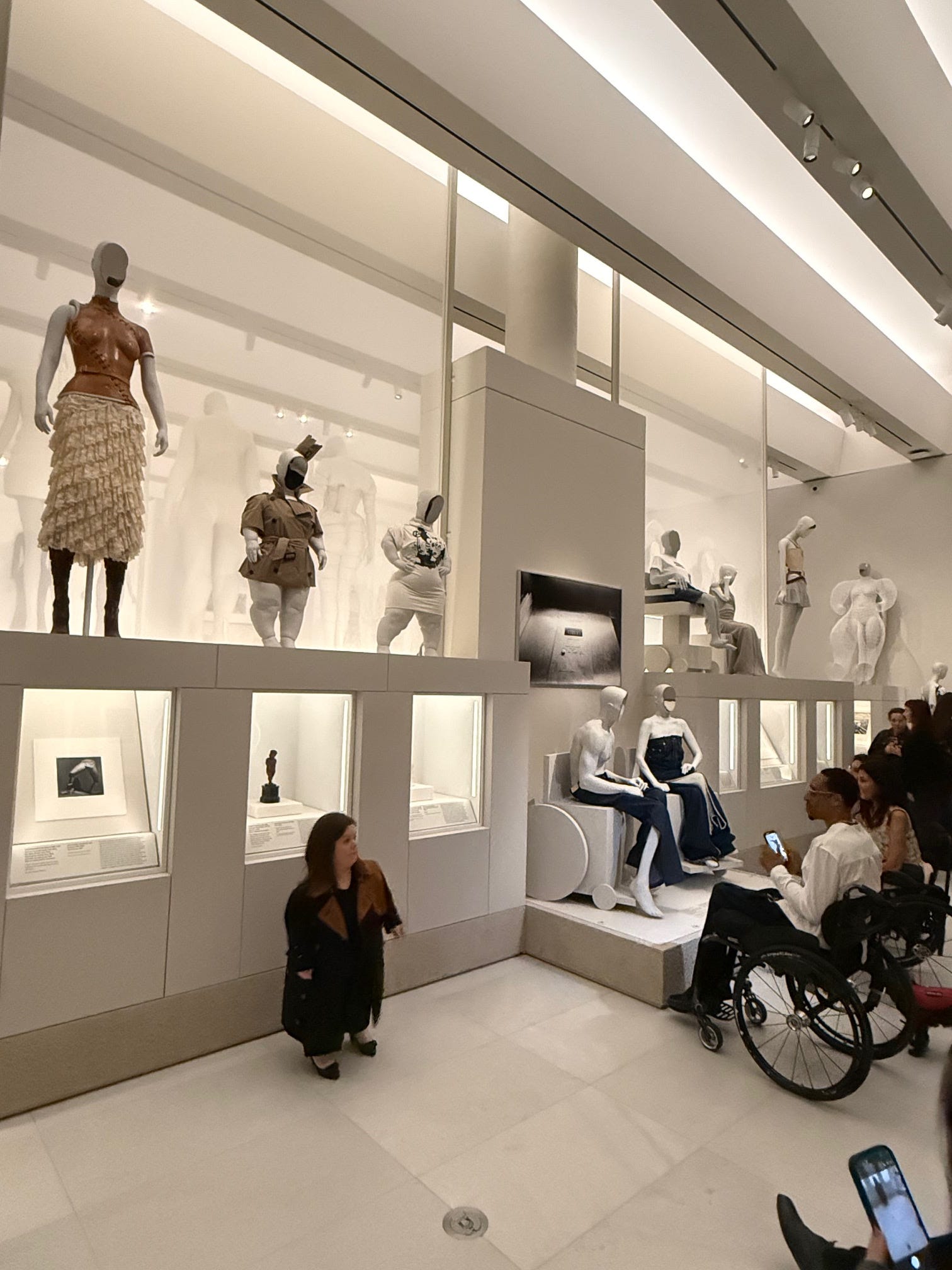
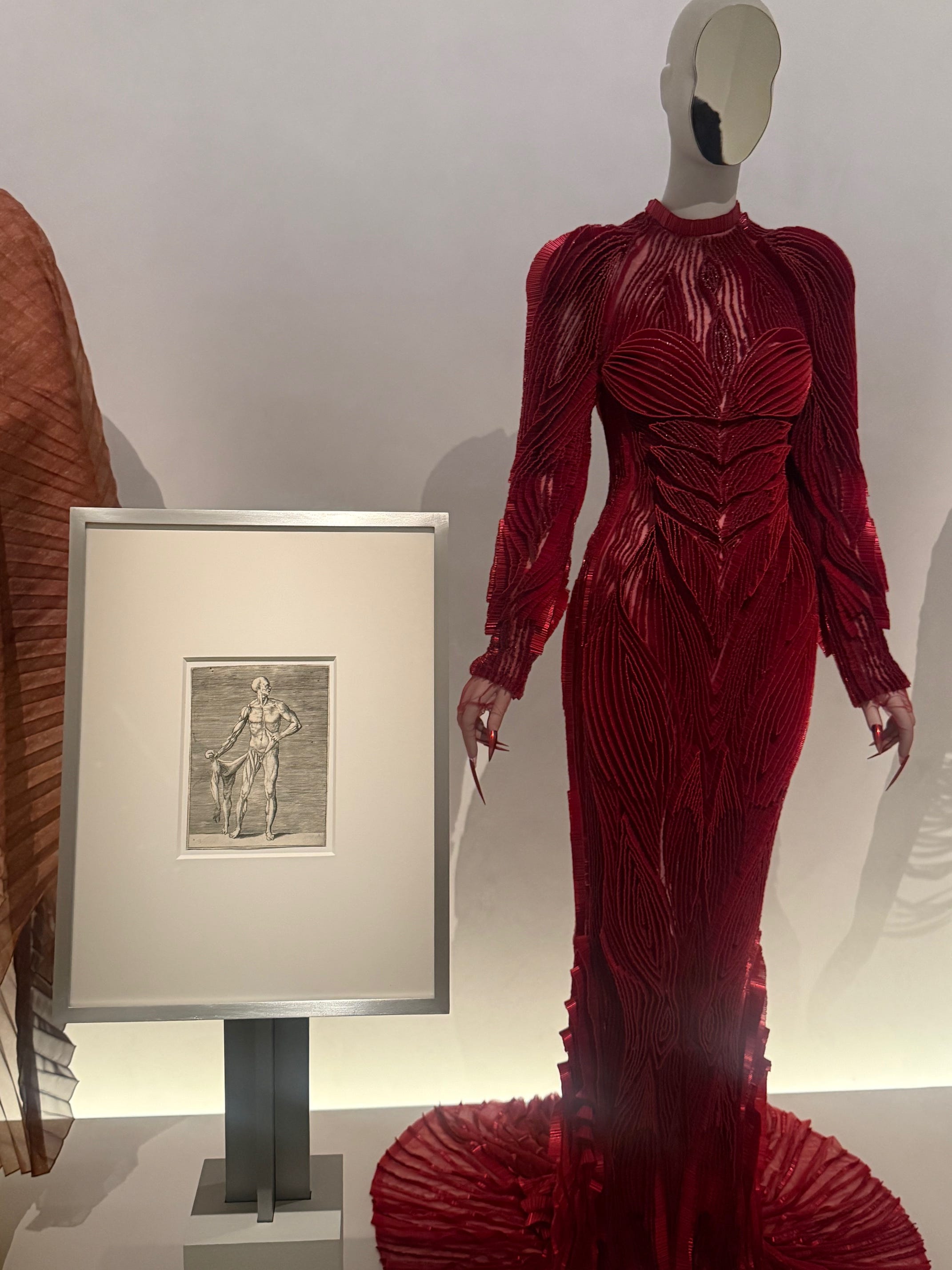
The Met’s “Costume Art” is located in a new gallery space that is nearly 12,000 square feet. It is made up of five wings and sits right next to the museum’s Great Hall. Compared to last year’s “Superfine,” it is as bright as it is colossal, as beautiful as it is towering, and has the alert presence of the cleanest airport’s duty-free shop. Upon entering the space, appropriately named the Condé M. Nast Galleries, I was immediately struck by the mannequins, which were all based on the measurements of real people, with mirrors instead of faces that reflected the viewer’s own. The figures’ proportions felt as essential to the artwork they were paired with as the garments they were cloaked in, and shifted throughout the exhibit to better communicate the accompanying artist statement. Giulio Bonasone’s engraving of a flayed man was positioned next to a red dress by Robert Wun that appeared to be threaded with arteries and organs. Michaela Stark’s “Fat Not Fertile” collection of asymmetrical corsetwear hung defiantly from breasts and bellies of full-figured mannequins in a collaborative rejection of body norms. I was delighted to see the work of Rei Kawakubo, specifically a Comme des Garçons dress from the 1997 ‘Body Meets Dress, Dress Meets Body’ collection. The dress was gray with padded intrusions along the abdomen, subverting the way traditional silhouettes were presented to showcase a body ‘out of bounds’ to highlight pregnant bodies, disabled bodies – every body, as Wintour suggested in her keynote.
The impact of seeing a diversity of body types fit to the world’s prevailing fashions, hours before fashion’s biggest night, suggests that perhaps we are entering an era of bodily autonomy and liberation, one that is unshackled from beauty ideals. At first glance, it is easy to position this as a victory in the face of the severe acts of body transmutation we are witnessing in contemporary culture: the sharp self-stencilization that ushers us all toward a monolithic standard that is a thinner, whiter, and more sculpted version of the self we were born with. But that itself would be a shallow reading. What if the two territories were not in opposition, but actually more related than we think? What if remaining in the body you were in, and swapping it out like a Fortnite skin, were the same in today’s context: art that can be bought or sold, or an artist statement?
There is a tension between celebrating the body we were born with and exercising our freedom to change it. Movements like “body positivity” have been more historically linked to themes of liberation, while today’s newer technology-backed bodies, with quicker fixes like Ozempic and plastic surgery, are more readily grouped as “oppressive” and reactionary to systemic forces. Interestingly enough, today, each end of the spectrum is fraught with societal pressure, but also social capital. The ability to make money by occupying either end of the spectrum has brought the two opposing positions closer together.
There is obvious capital to be gained in modifying yourself to meet a standard, stepping outside of the canvas you were born into and painting yourself into a new “self-invention.” Optimizing your body through “bio-hacking” services like red-light therapy, NAD+, vitamin IV drip, injectable growth hormones, and peptides is deemed an essential “upgrade” to get ahead and boost longevity. These services have become commonplace at spas and health clinics. Even wearable technologies like Ōura Ring, which partners with the surveillance giant Palantir, or the “sleep fitness” mattress 8sleep feed into the $38 billion global bio-hacking industry, all framed as positive interventions to improve your body and polish your canvas.
But today, the inverse is also true. There is capital to be gained by remaining in the body you were born in, as being perceived as “natural” can be an advantage with certain subgroups. The natural ‘girl-next-door’ aesthetic of the 90s is repackaged every year, most recently rebranded as ‘the clean girl aesthetic’ of TikTok, and, this year, it reincarnates again as the ‘Carolyn Bessette aesthetic’ with the popularity of Ryan Murphy’s new American Love Story series. In some cultures, natural hair is praised as being more wholesome than synthetic hairstyles. But this rigid mandate to remain exactly as you were born is not only oppressive, but its own form of bodily surveillance. Even Lizzo lost fans when she lost weight; her health journey was seen as a betrayal to those who only supported her anthems that celebrated a fuller figure.
Neither end of the spectrum exists outside of a strict moral complex that feeds a capitalist reward cycle. You are a utility regardless of the side you participate on. Today, getting clout for letting your hair go grey is cut from the same cloth as getting clout for undergoing a hair transplant. They are each other’s Wario; both are artist statements, even if unintended.
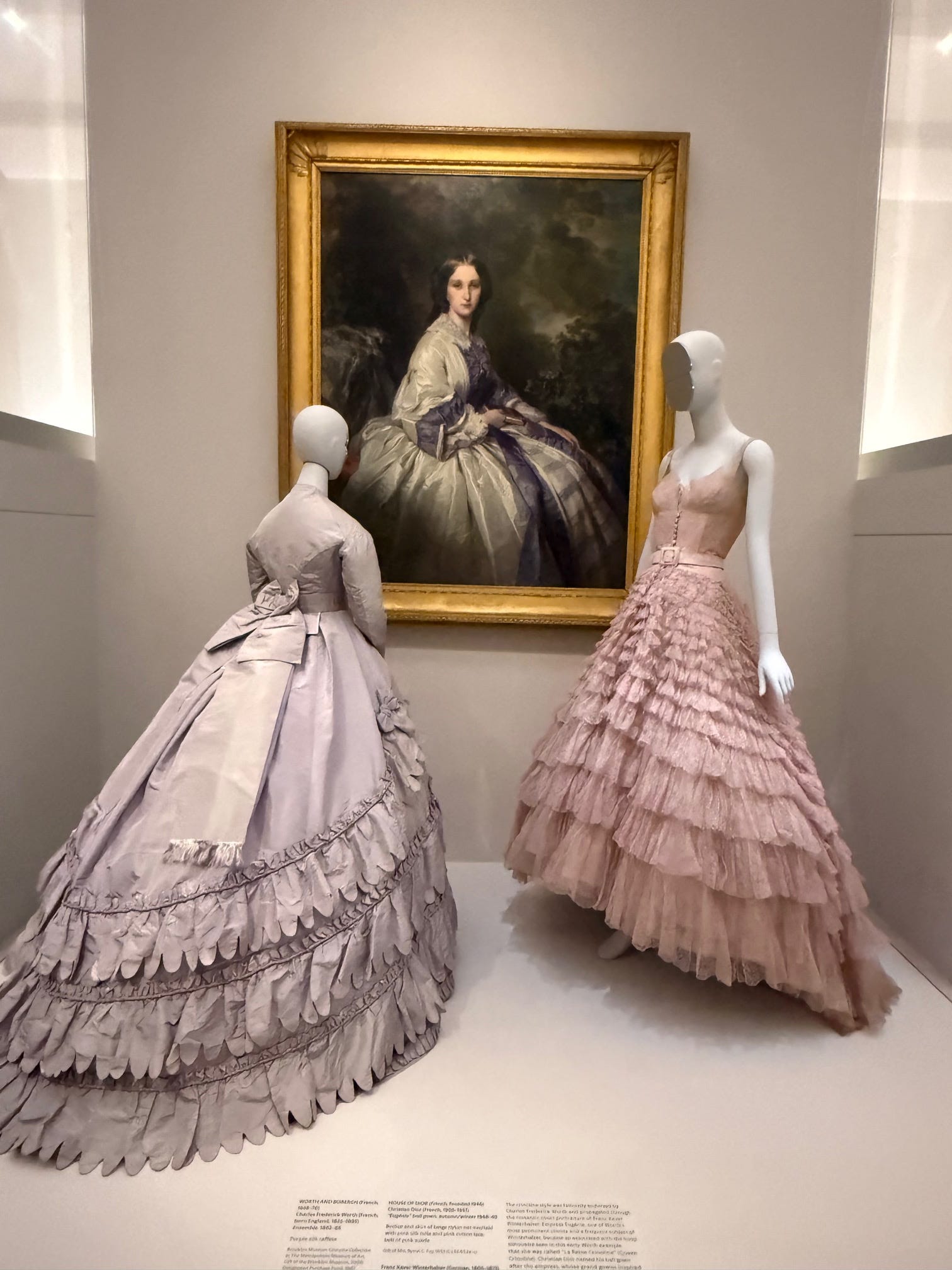
The body is closer to art than we’ve previously imagined: whether designed or unembellished, it is evaluated and subjected to market fluctuations. As such, the market response and the price matter as much as, if not more than, the canvas or its paint. “Art isn’t art until it’s critiqued,” but perhaps a body doesn’t have worth until it is appraised. Until the body, much like a mannequin of the Met, is behind glass and on display.
The Met’s collection is expansive and rewardingly ambitious, comprising over 400 works spanning centuries and geographies. It demands focused attention, and I walked slowly, completing three methodical laps before exiting the exhibit to join the rest of the city in the roaring, hot sun. As I rode home on the train, my phone began to light up with texts about Met Gala after-party guest lists and itineraries for the evening’s festivities. But my limbs felt tired, already weighed down by a stiff neck and a heavy Monday. I ditched the parties and turned my phone on Do Not Disturb. Choosing to invest in my art, I got a full-body massage instead.
Thank you for reading. Last week, I was interviewed by the New York Times for my coverage on Palantir’s streetwear strategy. You can find my original essay below:
Dressing the Surveillance Era: The American Promise of Palantir’s Sold Out Merch

The t-shirt is a garment that is distinctly American, its mass production first hailing from the U.S. Navy in 1913 as a shirt to be worn underneath official uniforms. The patriotic and protective genes threaded from the primitive shirts of the Navy can be traced to Palantir Technologies, an American pattern…
You can find my previous coverage of the Met’s ‘Superfine’ exhibit below, too:
The MET's Superfine, 'Sinners' and the Cost of Living Forever

Six brown bags wait patiently, as if ready to leave, facing the exit corridor in the last section of the Metropolitan Museum of Art’s Superfine: Tailoring Black Style exhibit. The scene resembles the final vignettes of a vacation, when your luggage lines the door, waiting for you to roll it home. The c…
LOOSEY is a bi-weekly newsletter about culture, technology, and the way we live. If this is something you like, consider subscribing and sharing. Let’s be friends on Instagram.

Another stunner of a piece, and an absolutely elite Wario reference.
wild to see no discussion/critique of the bezo’s involvement in this pagent for narcissistic one-percenters. 🥱